grief and queerness on mother’s day
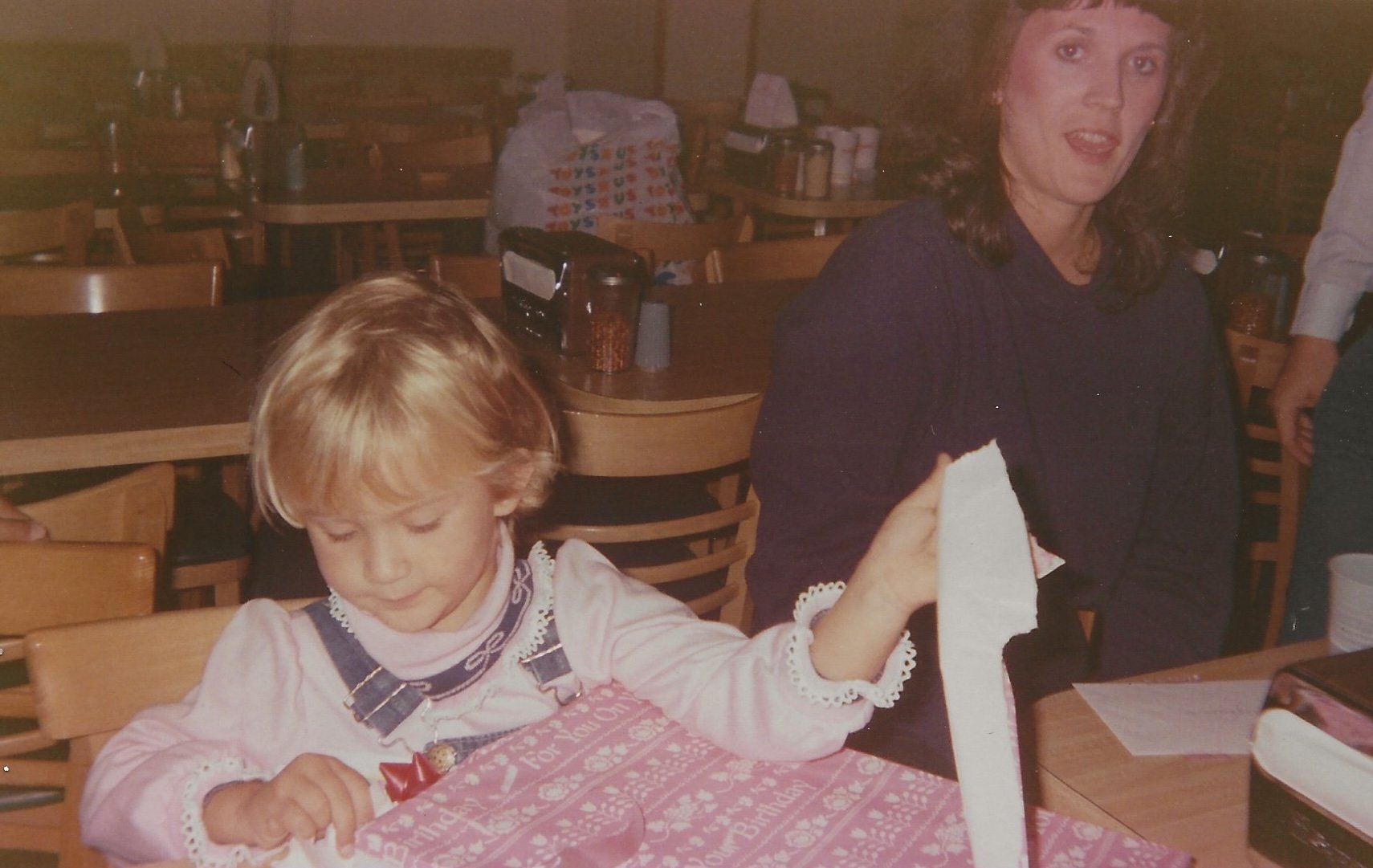
Me and my mom at my birthday party at Chuck E. Cheese. (1991)
Today marks the middle of the time of year that is the most marked with grief for me: Mother’s Day. My mom’s birthday was April 29, the day she died was May 27, and Mother’s Day falls somewhere in the middle. This year I’m thinking about the very queer lives my mother and grandmother led. (They were both straight.)
My mother, Gail, never remarried after she and my father divorced. She dated the same man on and off from the time I was in second grade until she died when I was 24. She never married him, even once all of us kids were out of the house. She mostly preferred to be alone, or to hangout with her kids or her sisters or other women.
When my mother died, so did my vision of the future. I thought I would go off and get married and have kids and then get divorced and live with my mom and other women in a Golden Girls-style situation. My mother and I had a very Dorothy and Sophia type of relationship.
I never came out to my mother. My older sister did, and my mom’s reaction wasn’t great. Something along the lines of not wanting my sister to “choose” that kind of life for herself. While my mother wasn’t queer, she herself had chosen a very untraditional life.
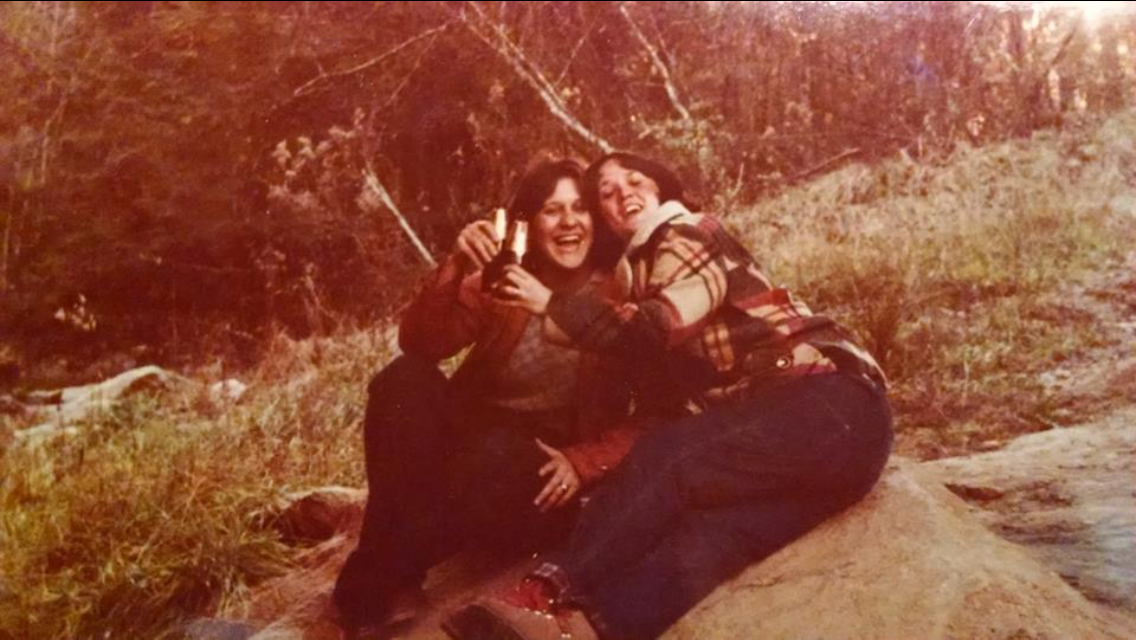
My mom (right) and her younger sister, June, drinking in the woods. (1976)
My mom was funny and compassionate. She was stubborn and principled. She taught my siblings and I to be best friends. She was a great singer, but would only sing at karaoke once she had had two beers and she sang almost exclusively Reba McEntire or the Judds. She got her LPN when I was in middle school, and she was back in school for her RN so she could become a midwife when she died. She had many jobs throughout her life, but she always told me that her favorite was being a mom.
She was one of those moms who read to her kids and showed up in the classroom. She made handmade costumes and threw incredible birthday parties. In high school, my childhood best friend told me that my mom had taught her how to ride a bicycle years earlier. She would come over on Saturday mornings before I woke up, and my mom taught her how to ride my bike.
I miss my mom so much. As children, my sister thought my brother was my mom’s favorite, and my brother thought my sister was. As adults, they think I was her favorite. We didn’t always get along, but I deeply believe she did the best she could with the tools that she had. She taught me to do the right thing, even when it was unpopular or difficult. Her life motto was “it’s the principle of the thing.” I try to allow myself to see more nuance than she may have, but all in all, I am so grateful that she was my mom.
The other great maternal figure in my life was my paternal grandmother, Odile. Similarly, she never remarried after her divorce from my grandfather in the seventies. She lived in a condo in Guaynabo, Puerto Rico filled with artwork by her, her friends, or pieces she picked up in Haiti and PR.
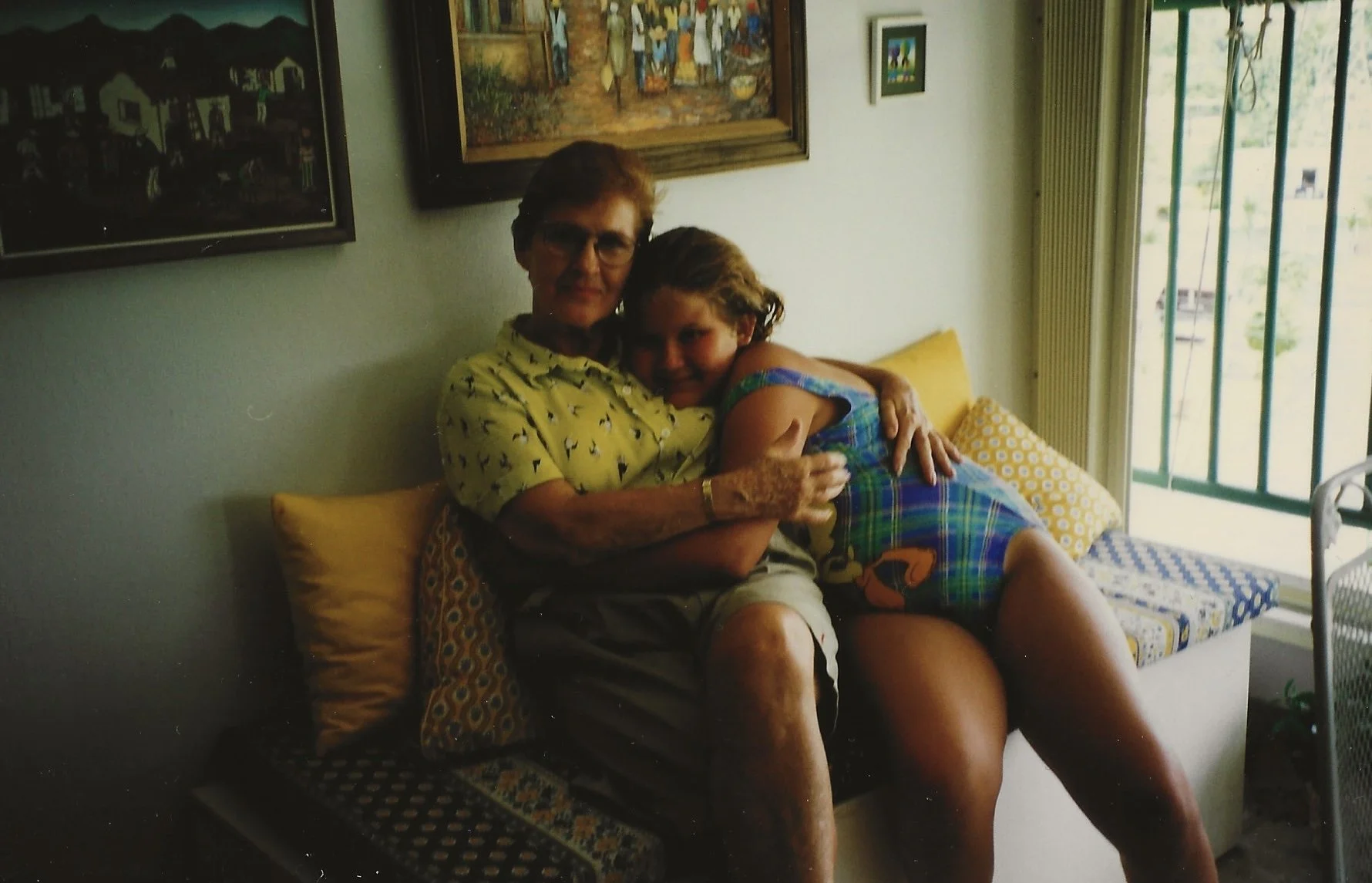
Grandma Odile and me. (1996)
I never knew my grandmother to keep a lover. Her home was always open to friends for dinner and brunch, and she spent a lot of time with a younger, handsome man named Johnny. It wasn’t until high school that I came to understand that Johnny was my grandmother’s gay best friend.
Grandma always made me feel like I was her favorite. She told me that I reminded her the most of herself. When I felt like my parents didn’t get me, my grandmother would tell me not to be upset with them. That they could not understand me because they were not artists, like she and I. That only artists could understand other artists.
She once asked me who I thought was my father’s favorite. I told her that without a doubt, my brother had always been his favorite. She told me she thought that I was. I told her there was no way because he and I could never get along. She told me she thought that’s why she believed it. My siblings had always been more eager for his approval, but he respected me more for being my own person.
My grandmother collected tiny little trinket boxes that I was obsessed with as a little girl. Her favorite story to recount was that when I was four years old, I asked if I could have some of them. She told me that they were part of a very special collection. Some pieces were from her friends, and they were all very sentimental. She told me that I could not have them then, but that she would make sure to leave them to me when she died. To which I innocently replied, “Wow, I hope you die soon!” It mortified me to hear this story repeated in my adolescence, but it made my grandmother laugh so much to tell it.
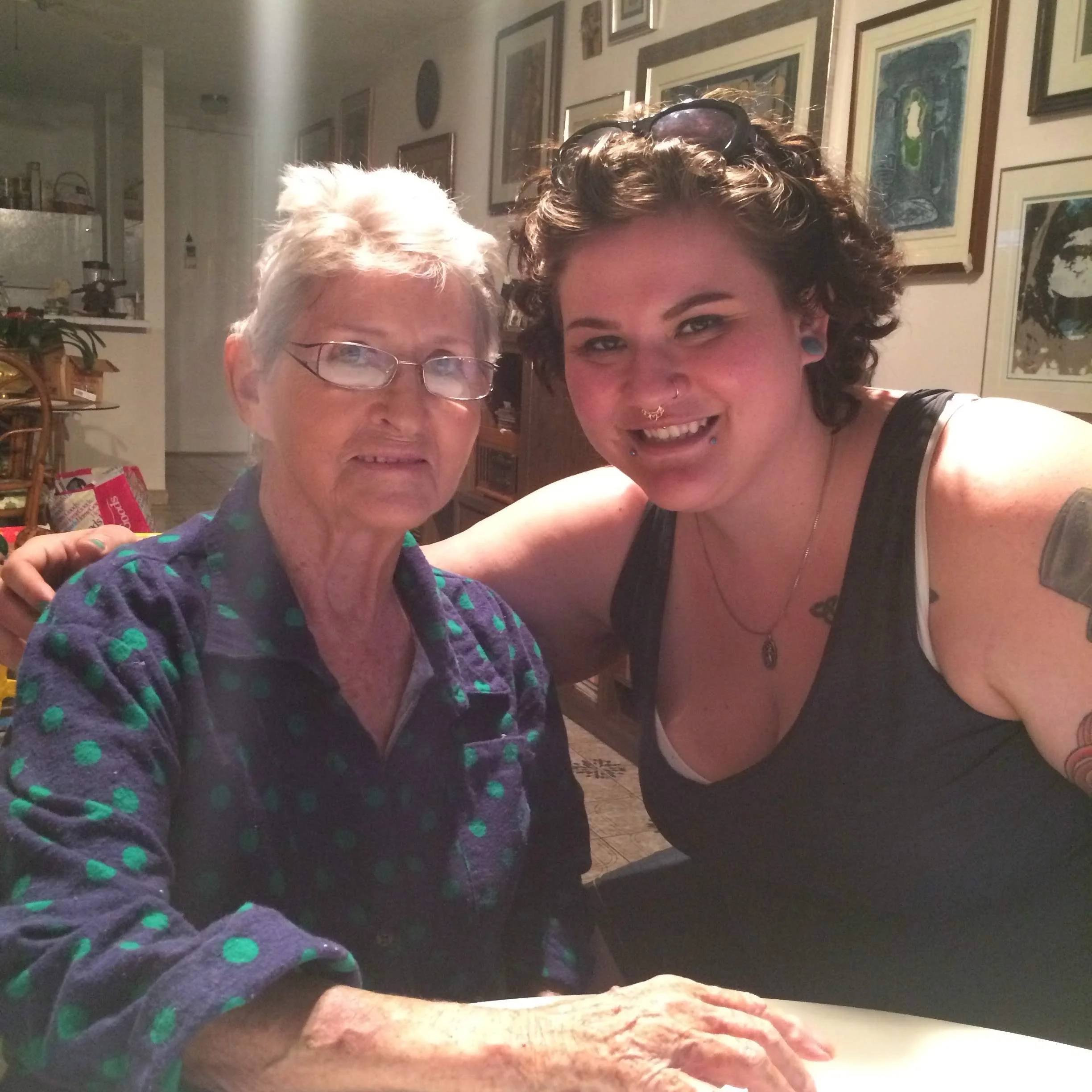
Grandma Odile and me. (2015)
The last time I saw my grandmother was in 2015. She was mostly bed-bound after many issues with osteoporosis and back surgery. I was grateful to be able to make dinner in her kitchen that she had cooked for me in so many times. I asked her to let me move in with her and care for her, but she refused. On one of the last days of my visit she said to me, “Estephie, I want you to take the boxes.”
We cried together. I told her I wasn’t sure that I could get them back home with me safely. I had only brought two small carry-ons. I went through the collection and carefully chose as many as I felt like I could safely carry and strategically rolled them into my clothing and into my backpack.
I got a video camera from my father for my thirteenth birthday. My grandmother flew up with it and I was able to get the only videos I have of my mother and my grandmother, the two independent women who shaped me. They taught me that romantic love would always be supplemental to an authentic life on my own terms. The value and the cost of a being an independent woman with an untraditional life.
The last few years have really taught me the costs of choosing an untraditional life. Humans are wired to seek connection with one another. Being accepted is a biological need. People are socially and financially rewarded for fitting in with social norms. The more you stand out in the margins, the harder it can be to find a place where you’re safe from having to perform social normalcy to survive.
I’ve learned how many people have thought of me as someone strong, bold, and unafraid to speak my mind. I want to be very clear: I am quite often very afraid of speaking my mind. Speaking my mind, my “truth”, and my “narrative” is very scary. There have been many times in my life when I have been punished or ostracized for speaking my mind. At school, in relationships, in jobs.
Today I had what we call “Motherless Day Brunch” with Teresa, who I have spent Mother’s Day with for several years now. We laughed. We cried. We ate. We drank. We talked about life and grief and queerness and what it is to be human in a way that isn’t socially acceptable or highly celebrated. We talked about how incredible it feels to share space with people who let you exist fully and authentically, even when it’s messy and inconvenient.
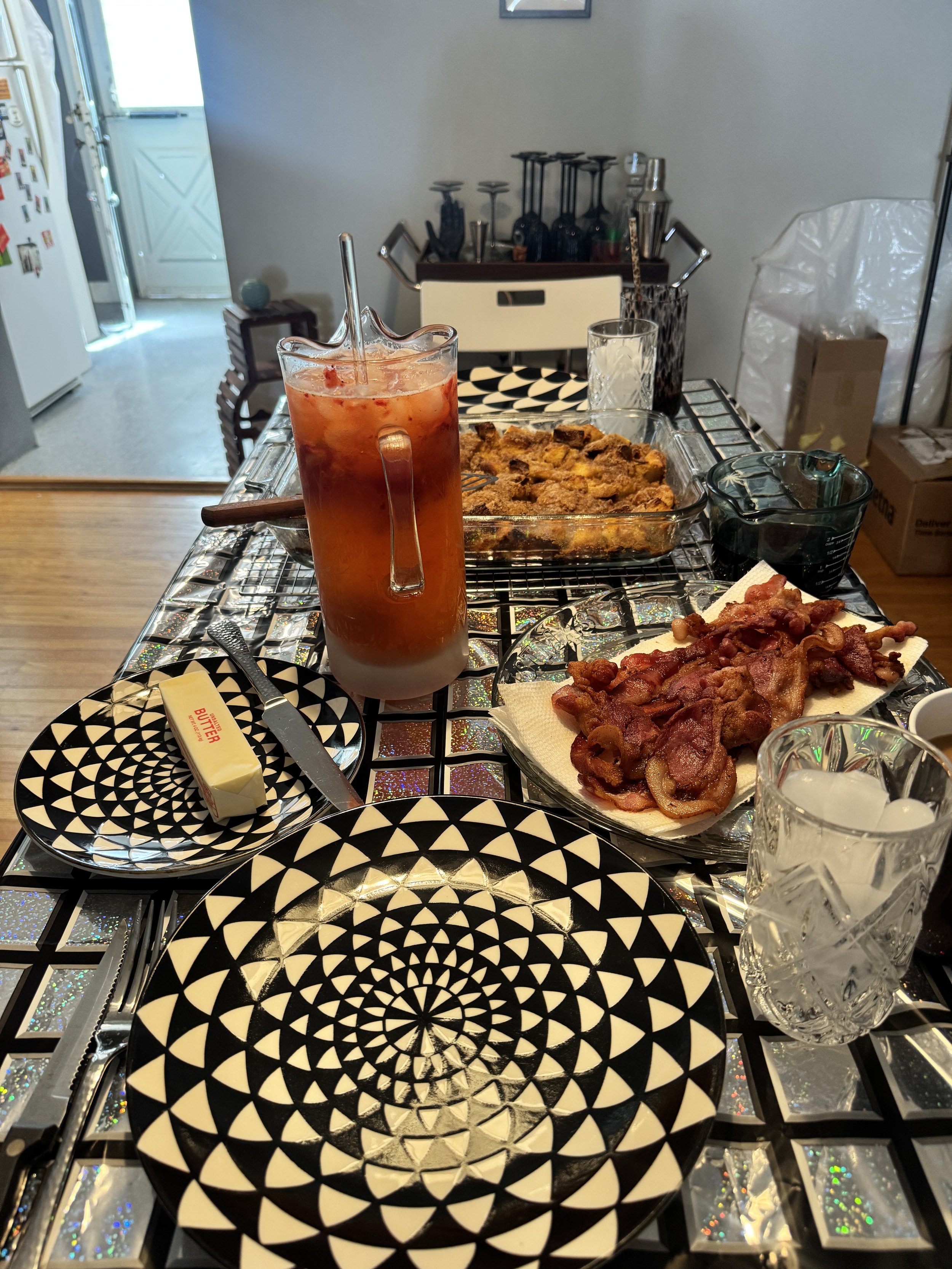
Brunch at Teresa’s. (2026)
I’m not a mother, but I’ve always prided myself on trying to be a queer elder for other young queer people. A weird, albeit trashy, socially unacceptable role model, like a John Waters heroine. One of the best things that both my mother and my grandmother taught me was to always leave a space better than I found it. I try to do everything in my limited power to make space for other queer people to feel safe and seen.
I’ve been an early person for other queer people to come out to. I’ve been a person people sought polyamory and kink advice from. I’ve been an artist that inspired other artists, a friend who has supported other friends. A manager, a mentor, a leader. I know that as scary as it is to be me, doing so in a way that is visible and empowering to literally anyone else has been the most rewarding and important part of my life. I have two incredibly untraditional mothers to thank for that.
Happy Mother’s Day to all the people who feel grief on this day, regardless of the reason.
Happy Mother’s Day, Gail. I love you and I miss you. Thank you for being a friend.
Happy Mother’s Day, Odile. I love you and I miss you. Thank you for sharing the great gift of art with me. And for the tiny boxes.
